
THE GERMAN AMERICAN COMMITTEE IS HOSTING ONE TOUR – ON SATURDAY, APRIL 18, 2026 AT 1:00 PM AUF DEUTSCH – IN GERMAN. IF YOU WOULD LIKE TO BE PART OF THIS SPECIAL TOUR PLEASE LET US KNOW WITH THE CONTACT BOX BELOW.
German American Committee of St. Louis
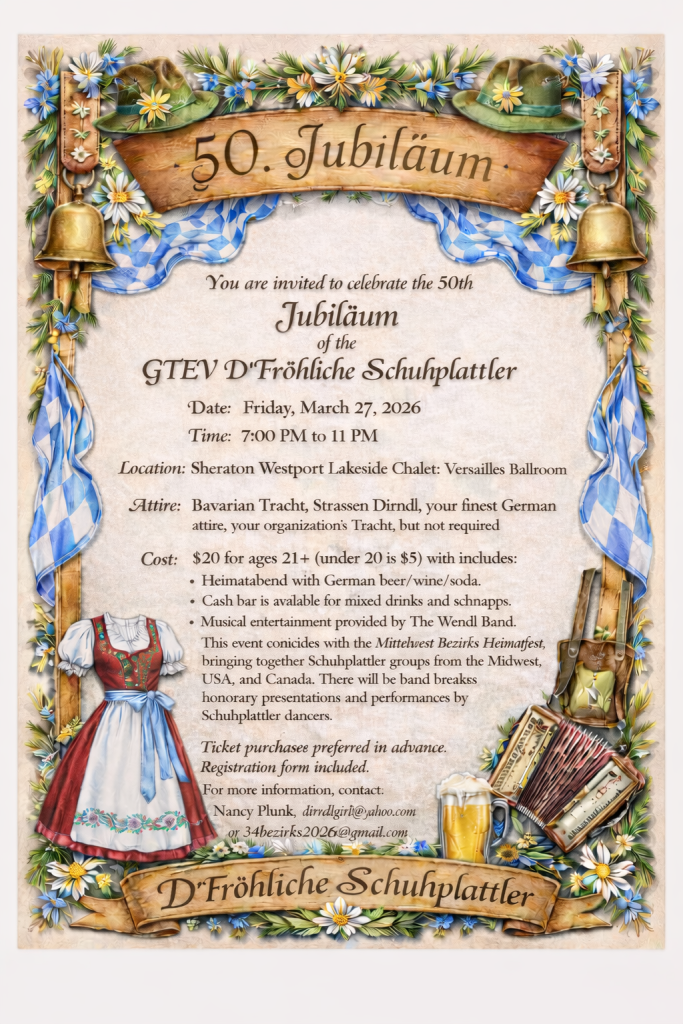

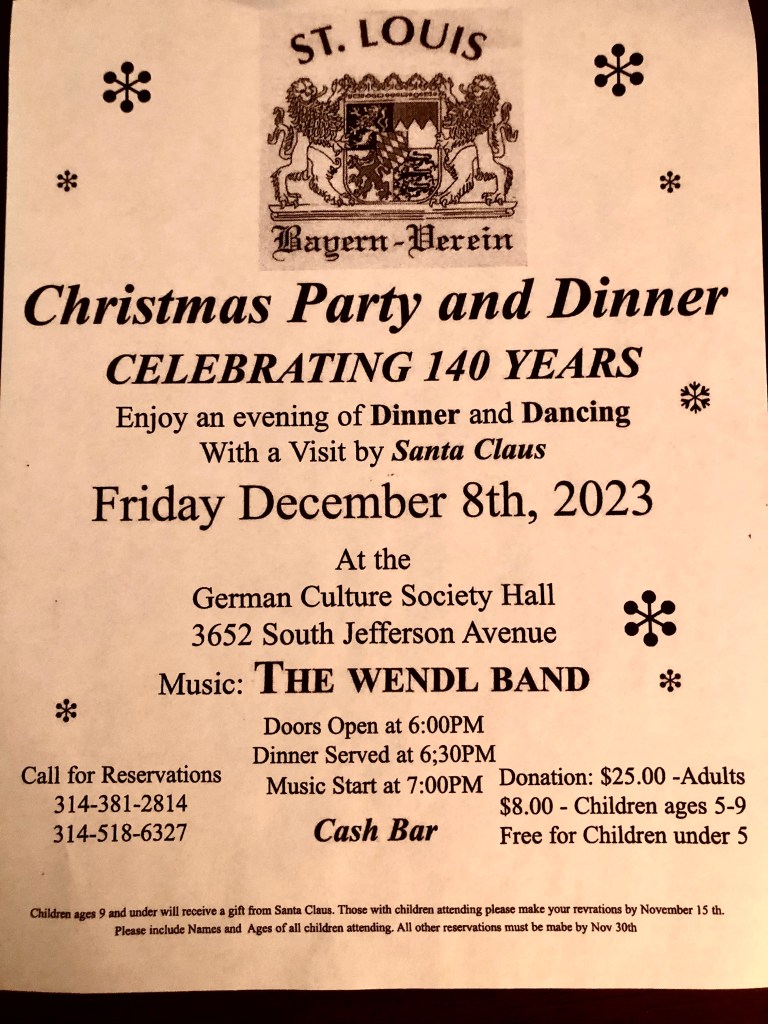
MAY is the month for Maifests! Enjoy a kaffeeklatsch or visit a Stammtisch group…
Visit the links for more information about any of the events listed below.
18 May 2023 ST. CHARLES COUNTY GERMAN HERITAGE CLUB Meets for its monthly KAFFEEKLATSCH @ 1PM at Sucrose Bakery at 700 S. Fifth Street in St. Charles. This club enjoys a social event on the Third Thursday of each month. You do not have to speak German or be a member to join us for coffee! https://www.facebook.com/StCharlesCountyGermanHeritageClub
19, 20, 21 May 2023 German Cultural Society of St. Louis will hold its annual Maifest at Donau Park in Jefferson County. The event is free and open to everyone. Come enjoy authentic German food, dancing and music in St. Louis’ ONLY German Park. For more information see their website http://www.germanstl.org/
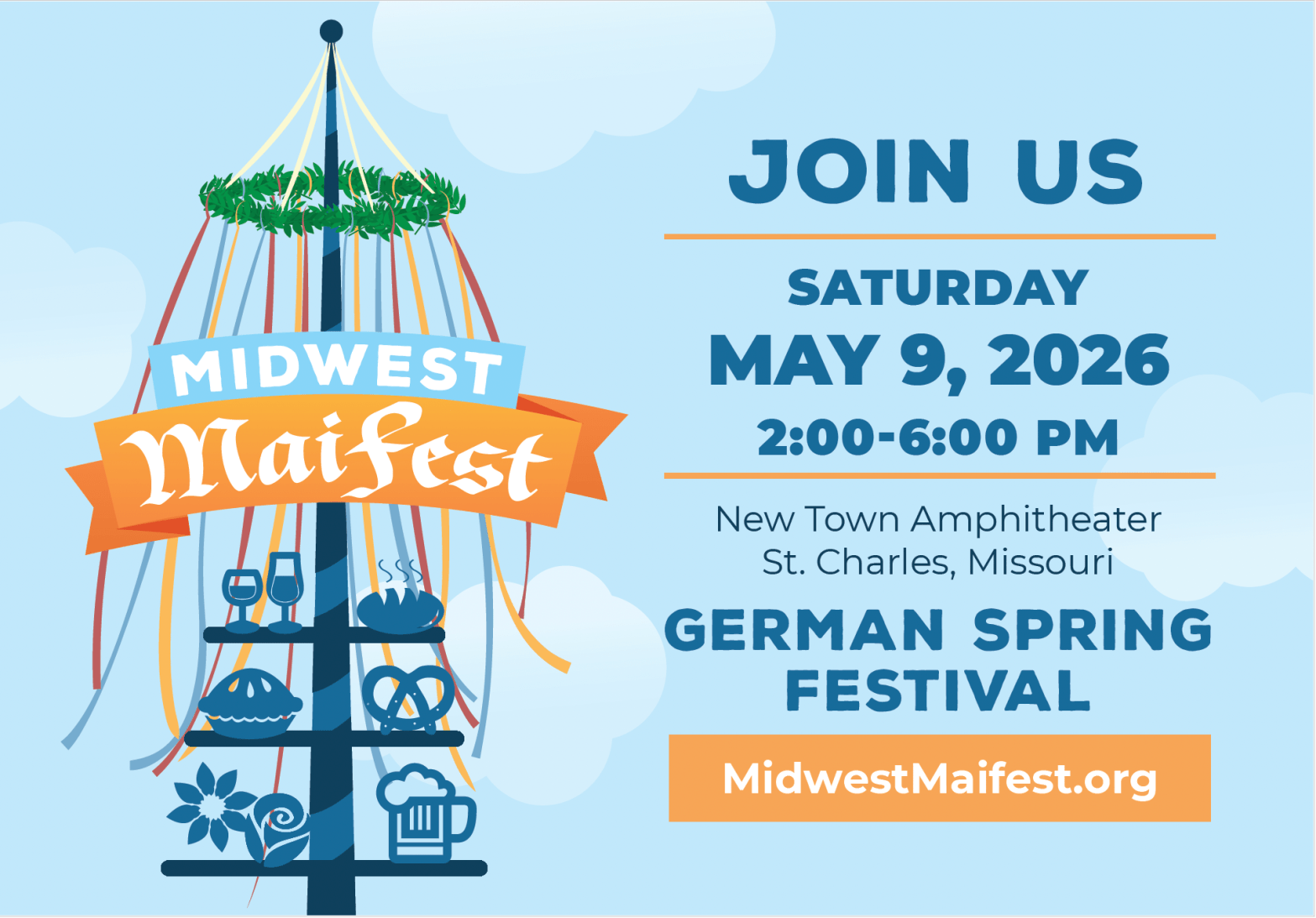
21 May 2023 The St. Charles-Ludwigsburg Sister City will hold their Midwest Maifest in New Town from 2:00-6:00 PM The Midwest Maifest is a one day festival to celebrate the arrival of Spring and the rich German Heritage of St, Charles. FOR DETAILS AND TICKETS go to https://midwestmaifest.org/
21 May 2023 Stammtisch will hold its regular meeting at Frailey’s Southtown Grill ( 4329 Butler Hill Rd., St. Louis, MO 63128) 3:00 pm -5:00 pm
To see a list of all of our future events see our Events Page at https://germanamericancommittee.org/calendar-of-events/
THIS IS A MESSAGE FROM THE GERMAN-AMERICAN COMMITTEE OF ST. LOUIS
Der Deutscher Kulturverein | The German Cultural Society
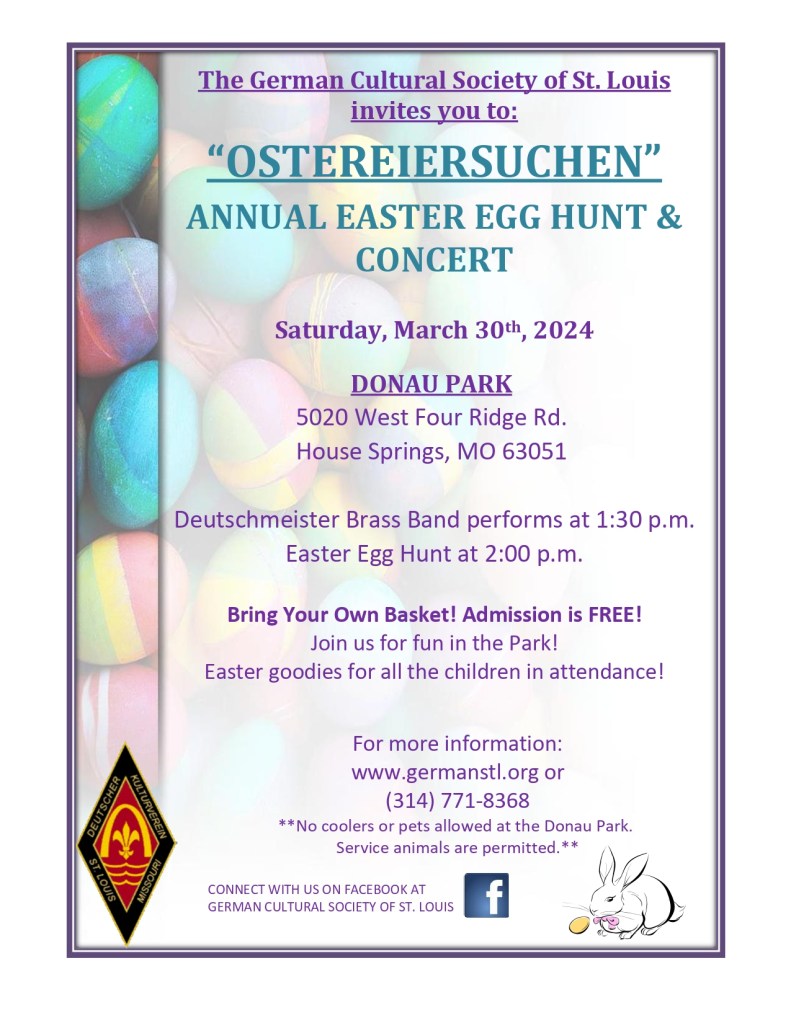
The Annual Easter Concert & Easter Egg Hunt
When: Saturday, April 8,2023
Where: Donau Park, 5020 West Four Ridge Road, House Springs MO 63051
Concert: Concert begins at 1:30 Music by Deutschmeister Brass Band
Easter Egg Hunt: Easter Egg Hunt begins at 2 pm , For all children in attendance.,Please bring your own basket.
Light refreshments served
The German School Association of Greater St. Louis is now able to conduct official German language exams (DSD I and DSD II, German Language Diploma I and II). Passing these exams certifies the knowledge of German required for admission to institutions of higher education in Germany.
Consul General Moessinger will recognize the school and its German program with a
visit on March 26, 2022, at 11:15 am and will welcome the German School Association as a new member to the Central Agency for Schools Abroad (ZfA).
The newly accredited DSD school, German School Association of Greater St. Louis, is situated at Christ Community Lutheran School (CCLS) at 505 South Kirkwood Road, 63122 (across from the Magic House). DSD exams are taken in more than 65 countries worldwide by approximately 75,000 students per year and certify German language proficiency at different levels.
The German School Association is a German Saturday School teaching German to adults and children from ages 4 years on. Children’s classes are Saturdays 9 to noon, adult classes are Saturdays from 9:00 a.m. to noon, and Thursday evenings. Beginners to advanced speakers learn German in an enjoyable atmosphere. The school was established in 1962.
In Memory Of
A treasured member of the German American community of St. Louis and beyond, Harrison Billy, passed peacefully on May 20, 2019. Harrison was everyone’s steadfast supporter, always there and always willing. He was known by all and was the go-to person for everything. From Sister Cities, Winter Ball and Karneval, from Volksmarsch Club and Germanfest to Stammtisch, he was an active member that so many depended on. He planned our trips to Milwaukee, and served as our faithful secretary on the German American Committee. His loss will be felt by many friends far and wide, from Kansas City to Chicago to Cincinnati where he had several friends as well. A quiet person, he was a mentor to many. Called Bud by his family, he was born in Antlers, Oklahoma, the son of Martha Cole Billy on May 2, 1941 and is survived by two sisters, Jean Middleton of Texas, and Mary Sue Barnett of Oklahoma, and many nieces and nephews as well. He was preceded by five brothers and sisters, Daryl Billy, Bernita John, Janet Taylor, and James Ben. He graduated from Antlers High School in 1959 in a class of 37, and was planning their fiftieth reunion for the remaining 25 members this year. After High School he served in the U.S. Air Force, then joined a brother in St. Louis and went to work for the Globe Democrat until the merger with the Post-Dispatch. Harrison would then join Roy Leimberg who was with Pitzman’s Company of Surveyors and Engineers, and together they undertook life and all things German. Roy would plan the events and Harrison would make it happen. We will all miss this most kind and gentle man. Safe journey dear friend.
Memorials can be made to a personal charity of your choice. Please share your memories below.


There are still seats available at the Feast, but please hurry with your reservations as seats are limited. Call 314-361-9017 or you can go online at http://mohistory.org/events/german-american-day-fest-and-feast_1538838000
What Makes Missouri So German? (Oct. 3)
Missouri’s German roots run deep, but why? What were the driving forces behind German emigration, and why did so many Germans end up in our region? Join Dorris Keeven-Franke, Missouri Germans Consortium, for a look at the earliest waves of German settlers in Missouri, from the early 1800s through the Civil War.
This program is free and takes place at the Missouri History Museum.
German American Day Fest and Feast (Oct. 6)
Fest and feast your way through German American Day! Start by soaking up the culture and heritage of Missouri Germans, then enjoy an afternoon feast highlighting the culinary specialties of Germany! Visit germanamericancommittee.org for more information.
This event takes place at the German Cultural Society of St. Louis at 3652 S. Jefferson Ave., 63118.
The Fest is free! Tthe Feast is $25 per person (or $20 for MHS members) and registration is required at mohistory.org/german.
What STILL Makes Missouri So German? (Oct. 10)
This panel will explore the ways in which German culture lives on in our community today at local and national levels. Moderator Dorris Keeven-Franke will share information about the German Heritage Corridor, the Sister Cities program, German language initiatives, and other issues related to contemporary German American life.
This program is free and takes place at the Missouri History Museum. Panel is Consul General Herbert Quelle, Dr. Steven Belko and Susanne Evens.
This series is presented with Missouri Historical Society, Missouri-Germans, the German American Committee STL, and St. Charles County German Heritage Club
Die Tanzgeiger (The Dance Fiddlers) is performing in New Town (St Charles) on Sunday Sept 30th, 6p-8pm! Die Tanzgeiger is the name of a seven-member ensemble hailing from the eastern provinces of Austria. This group uses a delightful combination of fiddles and other instruments to produce traditional folk music from Austria. These versatile tunes inspire dancing but are also valued in a concert setting. When listening to the music of the Tanzgeiger, one is transported into an atmosphere of powerful, heartfelt, and genuine music, with just the right dose of jaunty sass. People unfamiliar with authentic Austrian folk style are always surprised by its subtlety, complexity, and unusual sonorities.
Over the four decades of the group’s history, even as instrumentation, repertoire, and arrangements have changed, the intimate tie with their own roots and ear for the new and the foreign have remained constant. The group depicts both rural and urban Austrian musical styles. They have taken melodies from friends all over Europe: on tours from Norway to the Czech Republic and Hungary, from the Ukraine to Spain, they have collected memories that add the sparkle of many ethnic groups to their programs. As a result, the group has an approachable, welcoming musical language. As the Münchner Merkur wrote of the group, “With both a healthy splash of gypsy blood and of Nordic melancholy, the musicians convey common roots and multiple cultures at the same time.”
The ensemble performs exciting traditional music for a wide variety of occasions, and they can adjust their programs to suit the needs of particular events. Their repertoire consists of instrumental and vocal music, including folk songs and authentic Alpine yodelling, presenting a musical cross-section that links country and city, folk music and high art. Particular genres include waltzes, Ländler, polkas, marches, Jodler, Wienerlieder, Gstanzl, and Schrammelmusik. The roots of this music lie in the “long nineteenth century” (1750-1950), and thus it has close ties to Gustav Mahler, Viennese classicism, and especially Franz Schubert.
All the group’s musicians have academic training, and some are teachers and professors. They enjoy supplementing their concerts with workshops for children or students. The mix of young players with veterans who have decades of experience has only strengthened this group’s ability to provide traditional, entertaining, and spontaneous Austrian folk music to audiences young and old.
The Tanzgeiger appeared in 2002 at The Bard Music Festival “Mahler and His World” in a spectacular performance designed to show the roots of Mahler’s music in Austrian folk traditions. They look forward to visiting the US once more this fall to play for concerts and dances and join Oktoberfest celebrations. They can also present lecture-recitals and musical workshops. Sponsors for concerts arranged thus far include the University of Wisconsin-Madison, the Missouri Humanities Council, and Grand Valley State University (Michigan). To inquire about possible events, contact Lisa Feurzeig (feurzeil@gvsu.edu) or Rudi Pietsch (pietsch@mdw.ac.at).
Members of The Tanzgeiger
Rudi Pietsch (violin, vocal): Vienna & Niederösterreich. Professor emeritus, Institute for Folk Music Research at the Vienna University of Music and Performing Arts. Fulbright Scholar to US, 2010. Doctoral dissertation: The Music of Burgenlandian Emigrants and their Descendants in the US: the Instrumental Music of the Burgenland-Americans in the Lehigh Valley, Pennsylvania. He also plays the Schwegel, a small wooden flute-like instrument. Currently he teaches in Salzburg at the Mozarteum and gives masterclasses all over Europe.
Theresa Aigner (violin, vocal): Vienna & Oberösterreich. Currently studying for a master’s degree in violin pedagogy at the Vienna University of Music and Performing Arts. Along with her activities in folk music, she also plays in classical orchestras such as the Vienna Mozart Orchestra and in a traditional Viennese Schrammelquartett, Wiener Pretiosen.
Marie-Theres Stickler (button box accordion, vocal): Vienna & Niederösterreich. Studied folk music at the Mozarteum in Salzburg. Now a freelance musician and a member of many bands, including Alma and Martin Spengler und die foischn Wiener. She also plays the Schrammelharmonika (a distinctive kind of accordion) for concerts of traditional Viennese music in Heurigen (Viennese wine bars).
Michael Gmasz (viola, vocal): Vienna & Burgenland. Studied viola at the Vienna University of Music and Performing Arts and musicology at the University of Vienna. Now he is a radio announcer at Radio Klassik Stephansdom and also a member of Ensemble Klezmer Wien.
Sebastian Rastl (double bass, vocal): Vienna & Steiermark. Studied double bass in Eisenstadt and Graz. Now he is freelance and a member of classical and folk music ensembles. He also plays the tuba.
Claus Huber (trumpet, vocal): Vienna & Burgenland. Studied trumpet at the Vienna University of Music and Performing Arts and civil engineering at the Vienna Technical University. He also wrote a science dissertation at the Institute for Viennese Sound Style. Now he runs a big construction company and is also leader of the brass band Die Schürzenträger.
Dieter Schichbichler (trombone, vocal): Vienna & Steiermark. Studied trombone at the Vienna University of Music and Performing Arts. He now teaches in a music school and plays in the brass band Ma chlast.
By Jim Merkel
 Illinois, a mob went farther by lynching a German alien named Robert Prager.
Every fall as the leaves turn, and the weather softens, we begin to hear the sounds of a German band playing in the distance. The announcements of Oktoberfests spring from every corner, and the beer kegs are stacked in readiness. What if there was another way to celebrate your German-American heritage, and get in touch with the culture and the community?
Join us for this family friendly week of programs that celebrate the St. Louis region’s wonderful German-American heritage with several programs, events, and even a feast as we celebrate German American Day in the St. Louis region! Don’t worry… there will be some German beer, brats and music as no German celebration is complete without them!
German-Americans: History, Culture and Community
Germans have been part of America’s history since 1683, when a group of immigrants, thirteen families, from Krelfeld landed at Philadelphia, and founded Germantown, Pennsylvania. In 1688, they filed the first petition ever written, to abolish slavery, in the colonies. In 1883, German Americans in Philadelphia, began to celebrate this heritage with Deutsch-Amerikanischer Tag or German American Day. This spread throughout the United States, and every German-American community would also use this day to honor this heritage. This tradition has even survived the anti-German sentiment of World War I and II. And, in 1983, President Ronald Reagan proclaimed October 6, 1983 officially German-American Day.
In St. Louis, Missouri, one of the largest strongholds of German-American heritage, the German-American Committee of St. Louis, was officially founded in 1983. We work to preserve, educate and promote the German-American heritage of St. Louis. Please join us at the following events.
 Oct 6 GERMAN AMERICAN DAY FEST & FEAST Start by soaking up the culture and heritage of Missouri’s German American community, then enjoy an afternoon feast highlighting the culinary specialties of Germany!
 This day is presented as part of the series
by The German American Committee of St. Louis, the Missouri Historical Society, and the Missouri Germans Consortium. Please visit one of our websites for more information:
GermanAmerican Committee of St. Louis
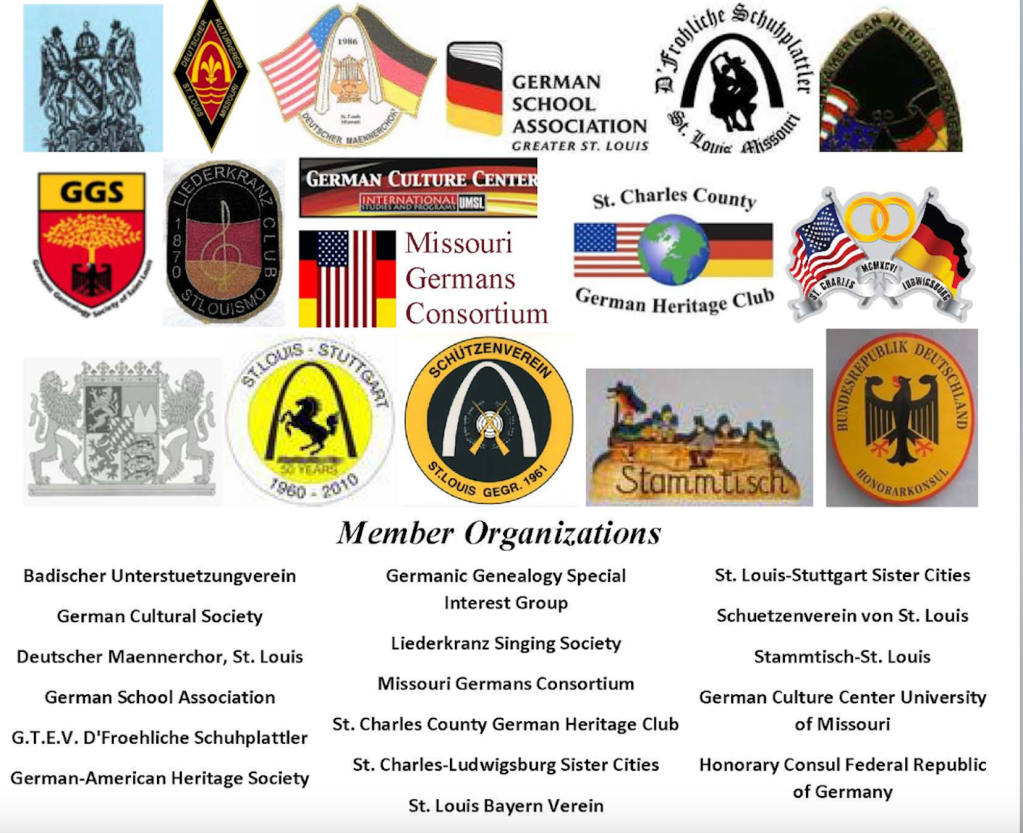
10 am – 4 pm Join us for a FEST of German organizations! Meet and Greet the 18 German Organizations of the St. Louis Region and learn more about how you can become more involved and connect with your heritage! The hall is open from 10am to 4 pm and everyone is invited. Enjoy a day with all of the German organizations in St. Louis.
1 pm – 3pm Feast your way through Germany with a culinary tour! Enjoy an afternoon feast highlighting the culinary specialties of Germany! The Feast takes place in the Grand Hall and reservations must be made in advance as space is limited. For the dinner reservations $25 in advance go to http://mohistory.org/events/german-american-day-fest-and-feast_1538848800 and click on the register link at the bottom or call 314-746-4599 and ask for reservations. Enjoy the music, dancing and food of the Germany.
3-5 pm Following the Feast will begin FREE performances at 3pm by St. Louis’ own Mannerchor (Men’s Choir), Dammenchor (Women’s Choir) and our own Liederkranz, the oldest combined men and women’s German singing group west of the Mississippi.
This day is presented as part of
by The German American Committee of St. Louis, the Missouri Historical Society, and the Missouri Germans Consortium. For more information call 636-221-1524 or please visit one of our websites for more information
GermanAmerican Committee of St. Louis
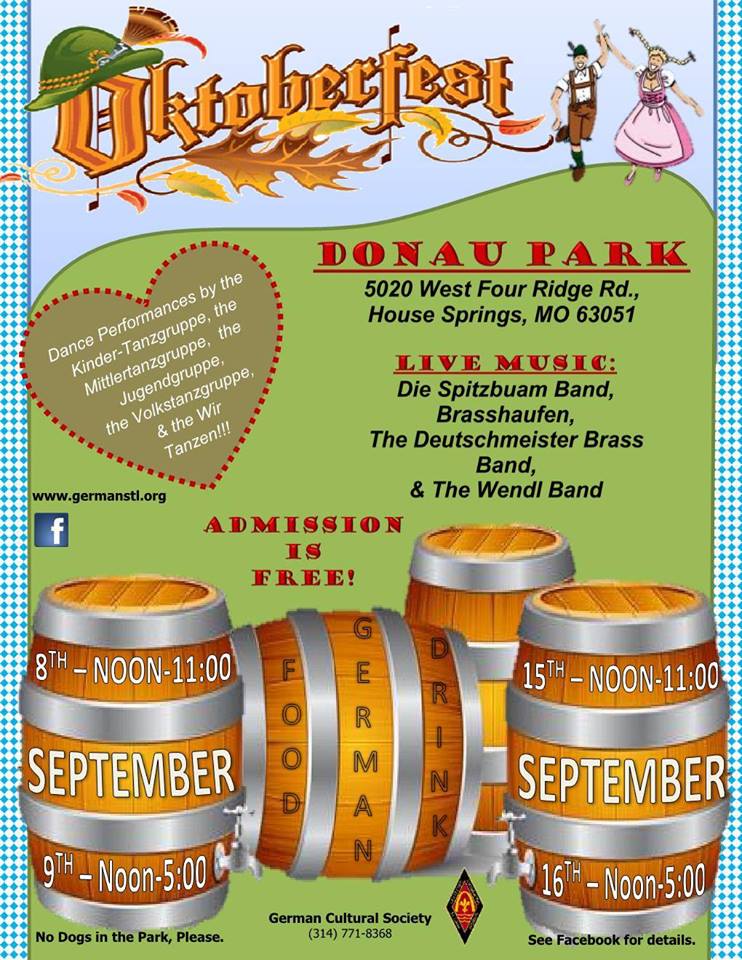
The Jugendgruppe of the German Cultural Society cordially invites you to attend our annual Rosenball, an evening celebrating German culture, music, and tradition.
Saturday, March 7th, 2026
German Cultural Society
3652 S. Jefferson Ave., St. Louis, MO
Doors open at 5:00 PM
Dinner and drinks will be available for purchase beginning at 5:30 PM
Dinner service will be available from 5:30–7:30 PM
Enjoy a festive evening featuring:
Admission:
Adults: $15
Teens (ages 13–21): $10
Kids (ages 6–12): $5
Kids 5 & under: Free
For tickets or more information, please contact Liz Young at 314-583-3053 or email germanstltickets@gmail.com.
We hope you will join us for this special night as we celebrate 50 years of our Jugendgruppe!
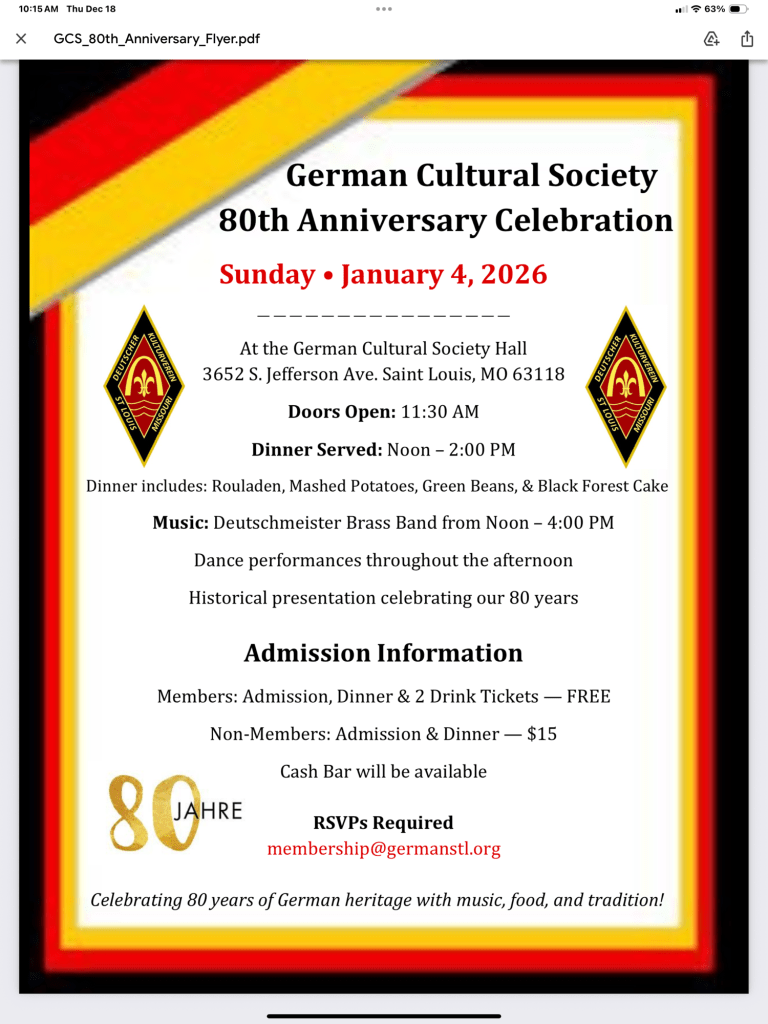
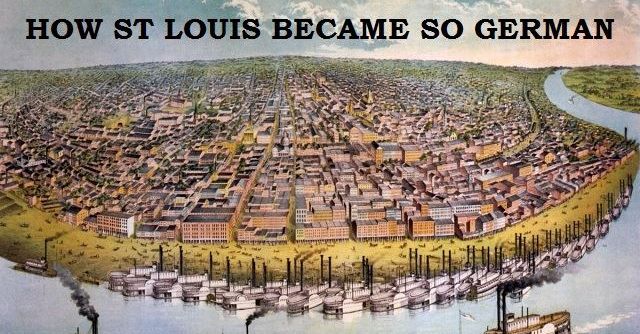
Recently, the German Culture Center at the University of Missouri—St. Louis honored Larry Marsh and celebrated its 25th Anniversary. Missouri Germans Consortium Executive Director Dorris Keeven Franke shared “What Makes St. Louis so German,” which can now be seen on YouTube!
THIS IS THE MOST GERMAN EVENT OF THE YEAR! COME AND YOU CAN BE A GERMAN TOO!
We invite everyone to celebrate their German-American Heritage and join in the fun, learn new stories, enjoy a German Fashion Show, hear the German Fairy Tales of the Bremen Musicians and Struwllpeter, join in a Pop-up Trivia Contest, We will have authentic German Food and Bier, and live German singers and Dancers.
ADMISSION $5 – CHILDREN ARE FREE – FUN FOR ENTIRE FAMILY
EVENT SCHEDULE
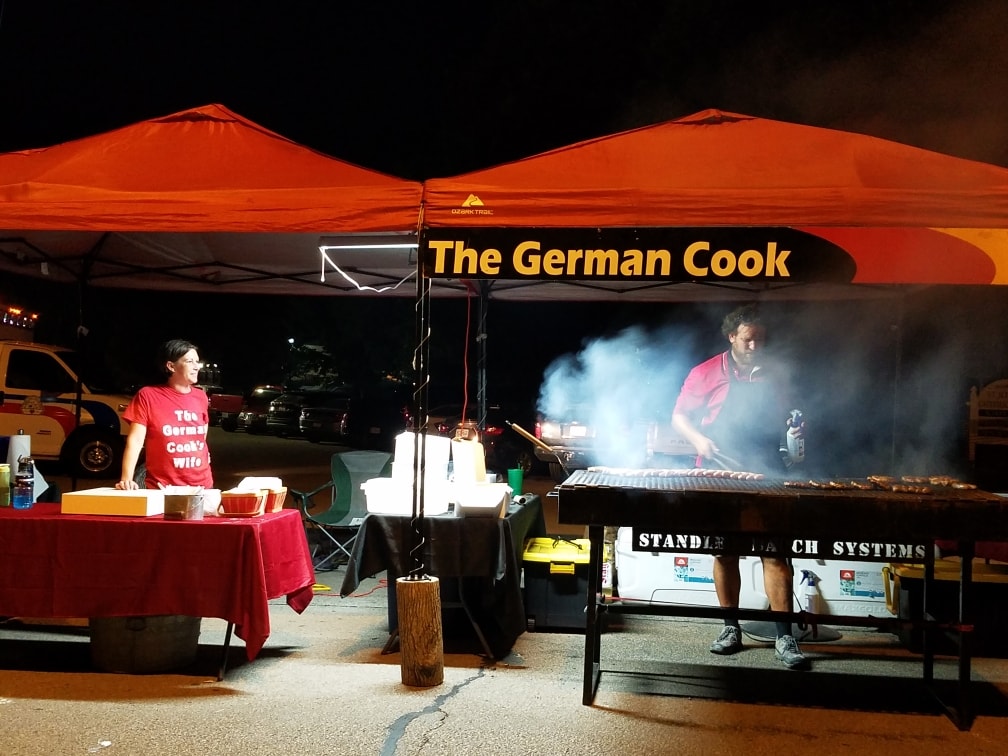
ALL DAY The German Cook – The real thing! Food Truck-Authentic German food
ALL DAY Missouri History Museum – Children’s Craft table
ALL DAY Bier and refreshments available by the German Cultural Society
1-4:30 MEET THE GERMAN AMERICAN COMMITTEE OF ST. LOUIS
12:30 Doors Open
1:00 Proclamation and introduction of the German American Committee– (On Stage)
1:30 Trachten Show! Fashion Show (Grand Hall)
2:00 Stammtisch – Struwwelpeter Stories (On Stage)
2:00. St. Charles County German Heritage Club – German Trivia w/prizes (Hall B)
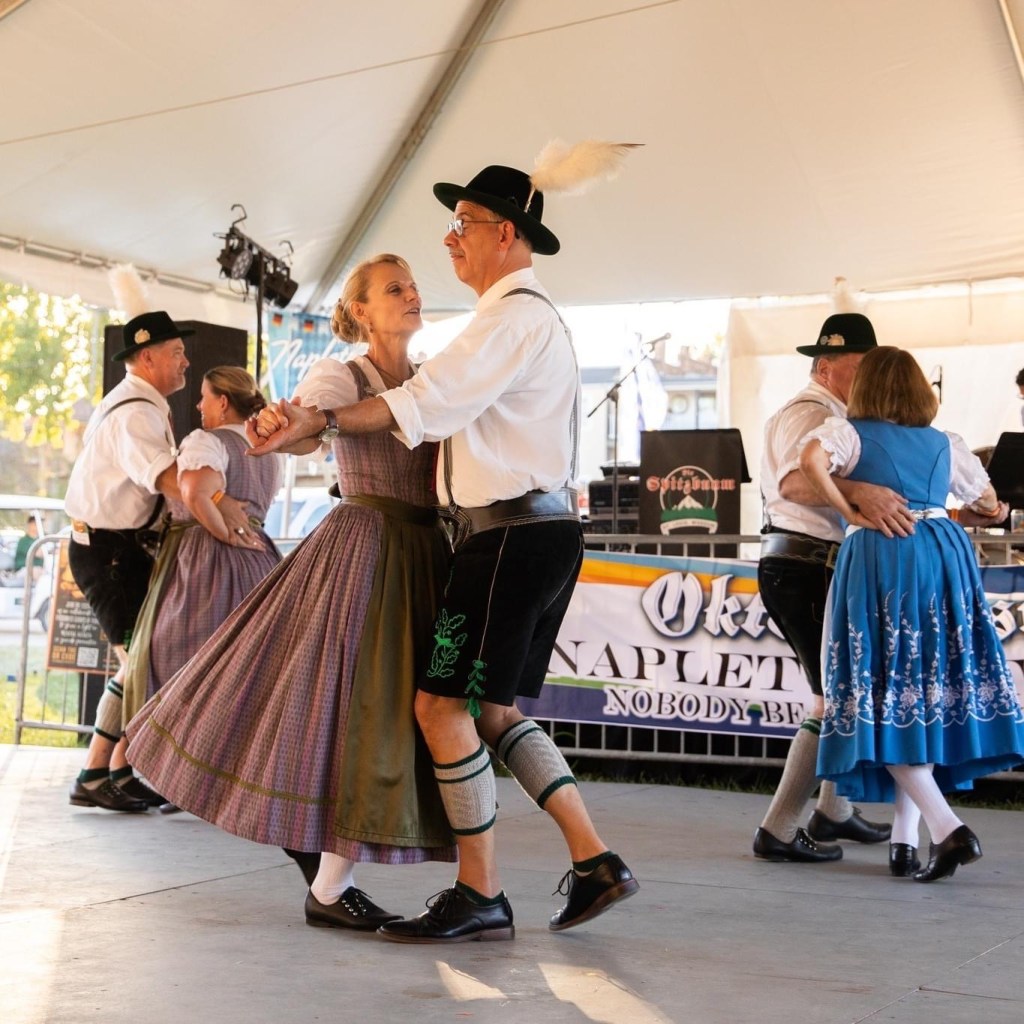
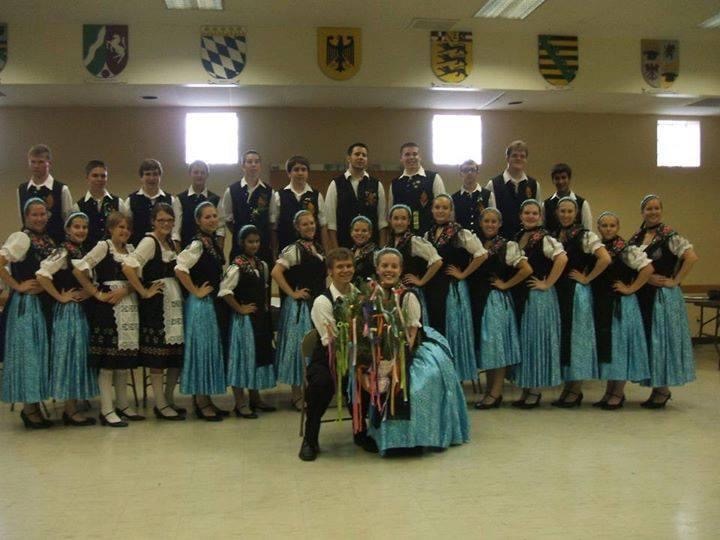
2:30 German Cultural Society – Jugendgruppe and Schuhplattler Dance (Grand Hall)
3:00 German School Association – Fairytale about the Bremen Musicians – (Hall B)
3:30 Liederkranz- A LIVE ENCORE Performance! (on Stage)
4:00 St Charles Ludwigsburg Sister Cities – What is a German Student Exchange (On Stage)
4:00 Missouri Germans Consortium Exploring Missouri’s German Heritage- Part 1– (Hall B)
4:30 Raffle Pull & Doors CloseContact UsName(required)Email(required)MESSAGE(required)
Liquor Raffle –Wagon Load! 1 ticket is a $1, 1 arm length is $10 and 2 arm length is $20












 GAC-STL